The Blackfoot River winding through a forested Montana valley

One Landscape. One Future.
One United Blackfoot.

More than 25 years in the making, shaped by those who know it best, and now headed to Congress.

Read the FAQs

One Historic Step Forward

On September 9, Rep. Ryan Zinke announced plans to introduce the A River Runs Through It Act. He formally introduced the bill in the House on September 21.

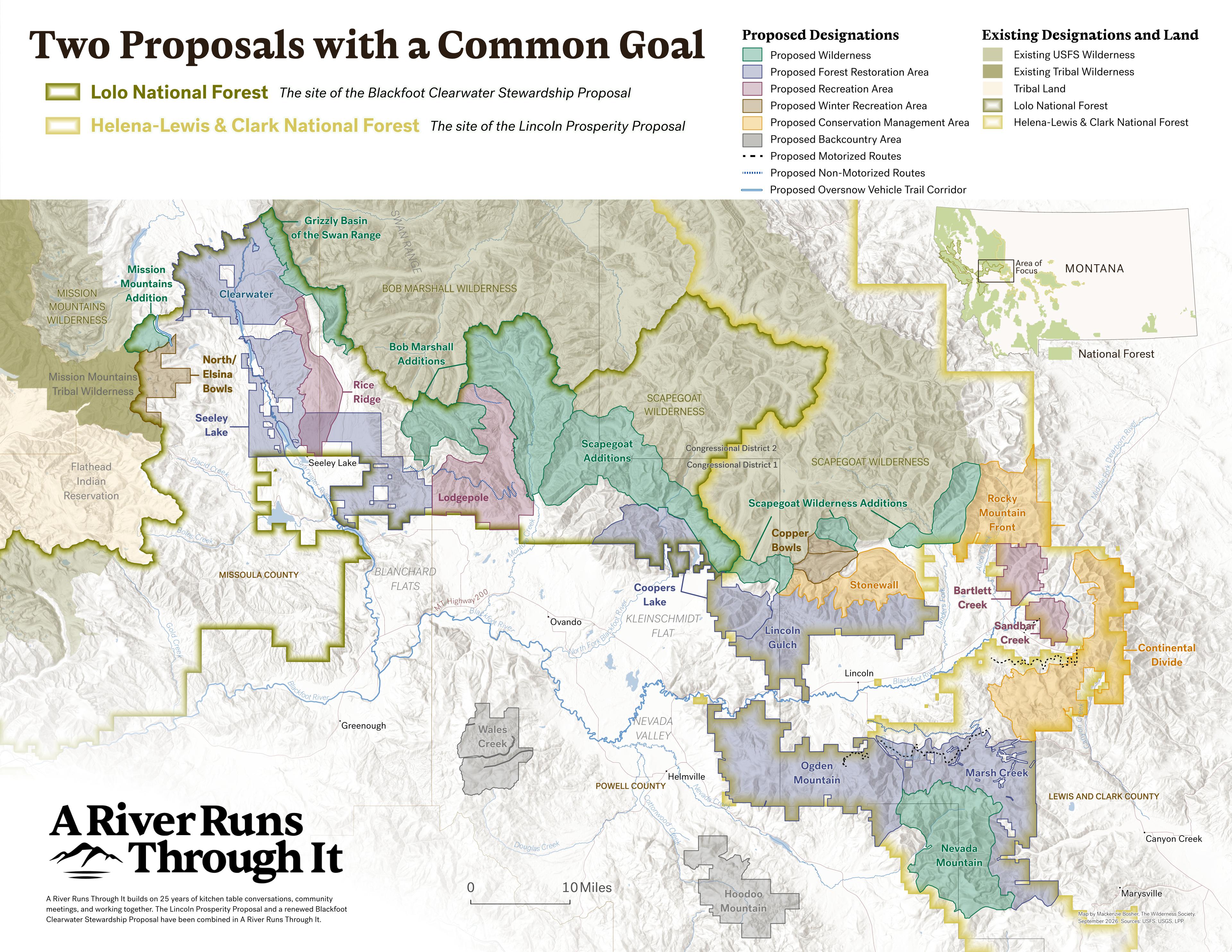
The legislation offers a balanced path forward for approximately 430,000 acres in the Blackfoot Valley. If passed, it would expand recreation and public access, support forest restoration and wildfire-risk reduction, protect existing uses, designate new wilderness, and conserve important wildlife habitat.

Sign the Petition
Rep. Ryan Zinke joined local residents, business owners, recreationists, timber representatives, and conservationists on September 9 to announce his plans to introduce the A River Runs Through It Act.

A Land with Multiple Uses.

Map titled Two Proposals with a Common Goal showing proposed land designations in western Montana
A native trout held above clear river water

Recreation

In Montana, our public lands are where we hunt, fish, hike, bike, ride, and explore. They're places where families gather, traditions are passed down, and people find freedom and adventure in the outdoors. That's why places like the Blackfoot River Valley matter to so many Montanans.

Anglers fishing the Blackfoot River with mountains beyond

Communities

The Blackfoot supports local jobs. Hunting, fishing, horse packing, and guiding support small businesses and bring visitors who spend money in our towns. When folks come here, they stay in local lodging, eat at local restaurants, and support outfitters, gas stations, and main street businesses. That kind of visitation helps keep our communities going.

The Blackfoot River flowing through pine forest at sunset

Forest Restoration

This proposal takes a practical approach to reducing wildfire risk while supporting the jobs and industries that keep Montana strong. Active forest management and restoration projects will improve forest health, reduce hazardous fuels, restore streams, and help protect communities, businesses, and watersheds from catastrophic wildfire.

An aerial view of the Upper Blackfoot landscape and surrounding mountains

Protecting Iconic Country

Monture Creek and the Upper Blackfoot are gateways to the Bob Marshall and Scapegoat Wilderness Areas and among the most iconic places in the Blackfoot Valley. Protecting these landscapes helps preserve hunting, fishing, horse packing, and backcountry traditions while ensuring future generations can enjoy the same experiences that make this place special.

Why the
Blackfoot Matters.

The Blackfoot River Valley is part of who we are. It is where we work, play, and raise our families.

An angler fly fishing in a clear forest river
A paddler traveling down the Blackfoot River
An aerial view of the Blackfoot River and surrounding forest

This landscape supports wildlife, keeps our communities healthy, and gives us access and recreation that enriches us. Generations of locals have taken care of this country, and we plan to keep it that way for the next generation. This effort was built from the ground up. Local folks have been working on this for decades, starting with the Blackfoot Clearwater Stewardship Proposal.

Over that time, we heard loud and clear that people want multiple use front and center, including recreation, forest restoration, access, conservation, and working lands. So we went back to the plan and made it better. We expanded recreation and built the A River Runs Through It Act as a stronger, more balanced approach to serving the Blackfoot community.

Who we are

Since the early 2000s, Montanans have worked together on a long-term solution for the public lands in the Blackfoot River watershed. We are business owners, loggers, conservationists, hunters, anglers, riders, and hikers.

Steering committee members.

  • A. Lee Boman, Former Board President, Seeley Lake Community Foundation & Founding Member of Seeley Lake ROCKS
  • Bill Cyr, Lincoln resident & retired Forester, DNRC
  • Russ Ehnes, President, Great Falls Trial Bike Riders Association
  • Smoke Elser, Retired outfitter and guide
  • Mack Long, Past President, Montana Backcountry Horsemen
  • Tim Love, Retired Seeley Lake District Ranger
  • Addrien Marx, Retired owner, Seeley Lake Rovero's Ace Hardware and Gas
  • Chris Eyer, Heart W Outfitters
  • Zach Muse, Lincoln Fire Chief & Upper Blackfoot Community Council
  • Jack Rich, Rich's Montana Guest Ranch
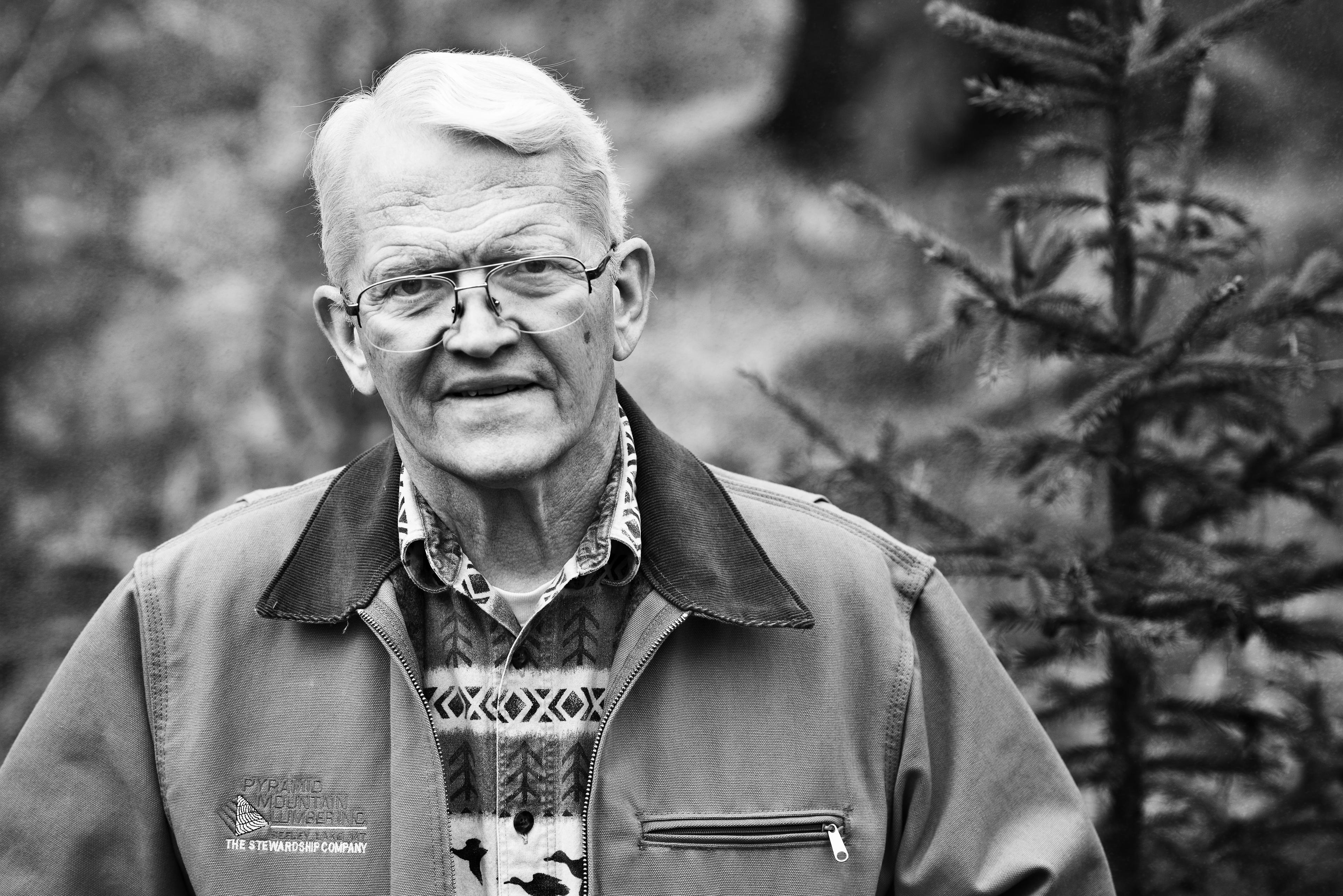
  • Gordy Sanders, Retired Forester, Pyramid Mountain Lumber
  • Jim Stone, Rolling Stone Ranch
  • Bill Wall, Board of Directors, Clearwater Resource Council
  • Zach Angstead, Wild Montana
  • Barb Cestero, The Wilderness Society
  • Keagan Zoellner, Mountain Mamas
Bill Cyr standing outdoors

Bill Cyr

"Montanans from all over come to Lincoln and the Blackfoot Valley to camp, to go fishing, to go 4 wheeling, to ride their motorcycles or to hike. So, what happens on the national forest impacts us a lot. That's really what drives our economy. These proposals were built so that no one group loses anything. We all got something out of this project."

Smoke Elser standing outdoors

Smoke Elser

"We're all drawn to the backcountry for the same reasons: to enjoy Montana's wild places, to connect with the natural world, and to restore our spiritual health. And we all value the Blackfoot landscape and deserve a place on it. It's that understanding that has allowed us to come together in support of these community proposals."

Gordy Sanders standing outdoors

Gordy Sanders

"Both the Blackfoot Clearwater and Lincoln proposals reflect Montana values of being good stewards to the land and working together with broad partners to get more accomplished. Our forests and rural communities need a vibrant forest products industry, and the focus on restoration in the Blackfoot Valley will help sustain the health of both. I'm happy to see these efforts join forces under the umbrella of A River Runs Through It."

Showing supporter 1 of 3: Bill Cyr

Sunlight falling across the forested mountains of the Blackfoot River Valley

The Threat.

Wildfires

We are seeing more frequent and intense wildfires, especially as more homes are built near forested areas. That is why multiple use includes active forest management. Putting people to work in the woods around the Blackfoot helps reduce risk and protects nearby communities.

Overcrowding on Public Lands

Montana may be growing, but it’s not making more public lands. Every year we encounter more people in the places we have brought our families to hunt, fish, and explore for years. Folks are seeing more pressure in places explored for years. If we don’t take care of what we have now, those opportunities start to slip away.

Water Quality and Quantity

Water quality in the Blackfoot River is already imperiled by historic mine pollution, and every year we seem to get less snow and rain. This makes it even more important that we protect and manage the areas around this river, so they are more resilient.

The Solution.

A River Runs Through It --- A Big Blackfoot proposal. It brings people together around multiple use and keeps the Blackfoot working the way it should, now and for the next generations.

Our solution brings together 20+ years of work, unifying the Blackfoot Clearwater Stewardship Proposal and the Lincoln Prosperity Proposal with one common goal.

Get to Know the Act

Frequently Asked Questions

The A River Runs Through It Act is a landscape-scale public lands proposal covering approximately 430,000 acres in the Blackfoot watershed. It brings together more than 25 years of work by local residents, hunters, anglers, outfitters, recreationists, conservationists, foresters, business owners, and elected officials.

Like any proposal of this size, it is complex. Here are answers to some of the questions we have received.

How much land would the bill permanently protect?

The bill would provide nearly 225,000 acres of permanent protection, including:

  • More than 130,000 acres of new wilderness
  • Approximately 62,000 acres of conservation management areas
  • Approximately 30,705 acres of new backcountry areas in the Hoodoo Mountain and Wales Creek landscapes

If passed, it would deliver Montana’s first new wilderness designation since the Rocky Mountain Front Heritage Act of 2014. It would also establish the first new wilderness area in Montana since 1983, the Nevada Mountain Wilderness.

Would the bill prevent firefighting or work to reduce wildfire risk?

No. The bill explicitly allows measures needed to control wildfire in the designated wilderness areas, including coordination with state and local agencies.

It also makes forest restoration a priority in designated restoration areas, allowing work such as thinning, prescribed fire, and vegetation management. This includes work near Lincoln intended to reduce wildfire risk to homes and infrastructure. Protecting backcountry landscapes and addressing wildfire risk near communities are both important parts of the proposal.

Does the bill open 180,000 acres to logging and road construction?

The bill identifies approximately 180,000 acres as Forest Restoration Areas where projects such as thinning, prescribed fire, stream restoration, vegetation management, and timber harvest may occur.

That does not mean all 180,000 acres would be logged or covered with new roads. In fact, none of these roads are allowed to be permanent. It identifies areas where restoration work may take place. This has proven important to local communities, including areas near Lincoln, where residents have asked for more frontcountry tools to reduce wildfire risk near homes and infrastructure.

How would the bill support local businesses and economies?

The Blackfoot Valley’s public lands support recreation and tourism in every season. From summer hiking, fishing, horseback riding, mountain biking, and OHV trips to winter snowmobiling and skiing, both wilderness and non-wilderness areas give people reasons to visit, stay longer, and return. Those visitors support local restaurants, lodging, shops, outfitters, guides, and other businesses.

Built by local residents and businesses, the proposal provides a clearer, lasting plan for conservation, recreation, and forest restoration. By protecting the landscapes people love and expanding opportunities to enjoy them throughout the year, the bill would help strengthen the area’s economy and support the people who make their living here.

Are 60,000 acres being opened to motorized vehicles?

No. The bill creates six designated recreation areas totaling approximately 60,000 acres. These areas currently support a mix of recreation uses, including hiking, hunting, fishing, mountain biking, horseback riding, snowmobiling, and off-highway vehicle use.

The designation does not open every acre or every trail to motorized travel. It protects existing access and identifies specific routes and connections for different types of recreation.

How would the bill affect motorized recreation and mountain bike trails?

The proposal was developed with motorized recreationists and mountain bikers to provide places for these activities alongside permanent conservation.

Consistent with current forest management plans, motorized vehicles and mountain bikes would not be allowed within designated wilderness. Elsewhere, the bill establishes recreation areas that support these uses, provides for snowmobile access in designated winter recreation areas, and authorizes new trail connections.

It also directs the Forest Service to identify opportunities for new motorized trails in the Bartlett Creek and Sandbar Creek recreation areas and new mountain bike trails in the Lodgepole Creek and Rice Ridge recreation areas. New trail construction would depend on funding and compliance with applicable laws.

Does the bill create 70 miles of new roads?

No. The proposal would authorize approximately 20 miles of new OHV trail connections linking existing routes into a 70-mile loop.

The 70-mile figure refers to the full trail loop, not 70 miles of new roads or trails.

What are conservation management areas, and would grazing be allowed?

Conservation management areas are intended to conserve wildlife habitat and public access while allowing compatible existing uses, including grazing and recreation, to continue.

They are not wilderness areas, and they are not intended to eliminate all human use. They establish lasting conservation protections, including a withdrawal from new mining and oil and gas development, while recognizing that these are working public lands with long-standing uses.

Does the bill remove protections from Wilderness Study Areas?

The bill would replace the current Wilderness Study Area designation on approximately 22,960 acres in the Hoodoo Mountain and Wales Creek landscapes with approximately 30,705 acres of permanently designated backcountry areas.

These backcountry areas would be permanently withdrawn from mineral entry and managed to protect their undeveloped character, wildlife habitat, and streams. Existing roads and motorized trails would remain open, existing grazing leases would continue, and some fuel-management work would be allowed.

Wilderness Study Areas are not congressionally designated wilderness. They are lands managed for specific characteristics until Congress determines their long-term future. This bill would provide permanent direction for these areas while protecting more backcountry acreage than is currently included in the WSA designation.

Is the full bill text available?

Rep. Zinke announced the proposal publicly on September 9 and officially introduced it in the U.S. House on September 21 under bill HR10529.

We believe people should be able to read the legislation and evaluate its details.

Read the Bill Text

Is this bill a compromise?

Yes. This bill is the result of more than 20 years of collaboration among people who came together around a shared commitment to the Blackfoot Valley.

We are proud of what we have achieved together. The A River Runs Through It Act would permanently protect thousands of acres of Montana’s most beloved and iconic wild places while expanding recreation opportunities, supporting forest restoration, maintaining public access, and responding to the needs of nearby communities. Together, these partners developed a durable path forward that is stronger because it reflects many perspectives.

Collaboration is not only about what each group gives up. It is also about what everyone gains.

As Bill Cyr, a Lincoln resident and retired forester, said at the announcement:

“I challenge you to look at this map and not find something in it that personally makes your life better. Everybody should be able to find something on this map.”

A sweeping mountain landscape in western Montana

This effort supported by:

Wild MontanaMontana Trout UnlimitedThe Wilderness SocietyTheodore Roosevelt Conservation PartnershipBack Country Horsemen of MontanaMontana Outfitters and Guides AssociationMountain MamasBackcountry Hunters and Anglers